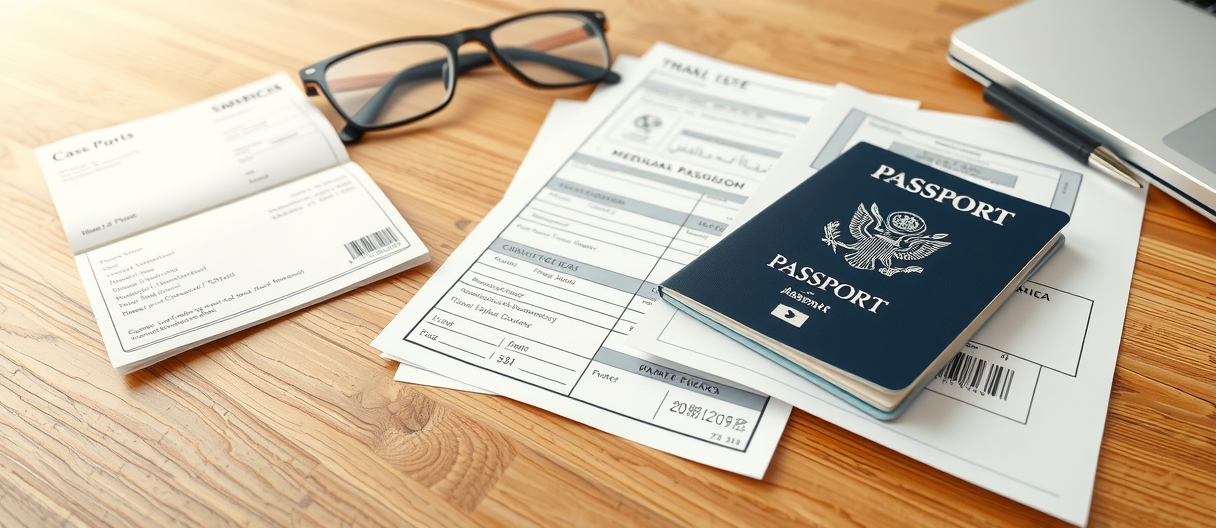
- Form I-20 is issued only by an SEVP-certified school after you prove your finances
- The I-901 SEVIS fee for F-1 students is 350 US dollars, and the visa application MRV fee is 185 US dollars
- Financial documents used to obtain the I-20 must usually be no more than six months old.
Getting into a United States university is only the first step. Before you can apply for an F-1 student visa, your school must issue a Form I-20, and that only happens once you submit the right documents. This guide lists every document you need in 2026, from admission proof to financial evidence and fee receipts.
What Is the Form I-20 and Who Issues It?
Form I-20 is the Certificate of Eligibility for Nonimmigrant F-1 Student Status. An SEVP-certified school issues it through a Designated School Official once you are admitted and have shown proof of funds. You need this document to pay the SEVIS fee, apply for your visa, and enter the United States.
The I-20 is not a visa. It is the record that confirms you are a genuine student enrolled at a school approved by the Student and Exchange Visitor Program. The consular officer uses it, along with your other papers, to decide whether to grant the actual F-1 visa stamp.
- It carries your unique SEVIS ID, which starts with the letter N.
- It lists your program, start date, and estimated cost of attendance.
- It must be signed by both the Designated School Official and you.
Which Documents Are Required to Get Your I-20?
To receive your I-20, the school needs a copy of your valid passport, your signed admission or acceptance letter, and financial evidence covering at least the first year of study. Some schools also ask for standardized test scores, transcripts, and a completed application form before the Designated School Official generates the record.
- A clear copy of the photo page of your valid passport.
- Your official admission or acceptance letter from the school.
- Proof of funds for at least the first year of study.
- Bank statements in your name or your sponsor's name.
- An Affidavit of Support if a family member or third party pays.
- Academic transcripts and test scores if the school requests them.
F-1 visa interview questions and answersRead →
What Documents Do You Need for the F-1 Visa Interview?
For the F-1 visa interview you carry your valid passport, the printed DS-160 confirmation page, your Form I-20, the SEVIS I-901 fee receipt, the MRV fee receipt, and a compliant photo. Consular officers may also request transcripts, degrees, test scores, and proof that you plan to return home.
- Valid passport, valid for at least six months beyond your stay.
- DS-160 confirmation page with the barcode.
- Original Form I-20 signed by you and your school.
- SEVIS I-901 fee payment receipt.
- MRV visa application fee receipt and interview appointment letter.
- One recent photograph meeting the official specifications.
How Much Are the SEVIS and Visa Fees in 2026?
In 2026 the I-901 SEVIS fee for F-1 students is 350 US dollars, paid at the official fmjfee.com portal. The non-immigrant visa application, or MRV fee, is 185 US dollars. These two charges are separate, and both receipts must be kept for your interview and your arrival in the United States.
| Fee 2026 | Amount (USD) | Where to Pay |
|---|---|---|
| I-901 SEVIS fee (F-1) | 350 | fmjfee.com (official SEVP portal) |
| Visa application MRV fee (F-1) | 185 | Country-specific visa payment site |
How Do You Prove Financial Ability for the I-20?
Schools accept bank statements from you or your sponsor, scholarship and assistantship letters, approved loan confirmations, and financial aid awards as proof of funds. When a family member or third party pays, an Affidavit of Support is required. Most schools insist every financial document is no more than six months old.
- Bank statements in English with names clearly printed.
- Scholarship or assistantship letters showing your name and the covered amount.
- Approved loan confirmation letters, not just applications.
- An Affidavit of Support for third-party or family funding.
What Happens If You Lose or Need a Reissued I-20?
If you lose or damage your I-20, your Designated School Official can print a replacement. A new I-20 is also issued for travel signatures, SEVIS status changes such as Initial to Active, or major updates to your program, funding, or personal details. Always keep every I-20 you are ever given.
- You misplaced or damaged the physical copy of the form.
- You need a fresh travel endorsement signature before re-entry.
- Your SEVIS status changed, for example from Initial to Active.
- There was a major change to your program, funding, or personal information.