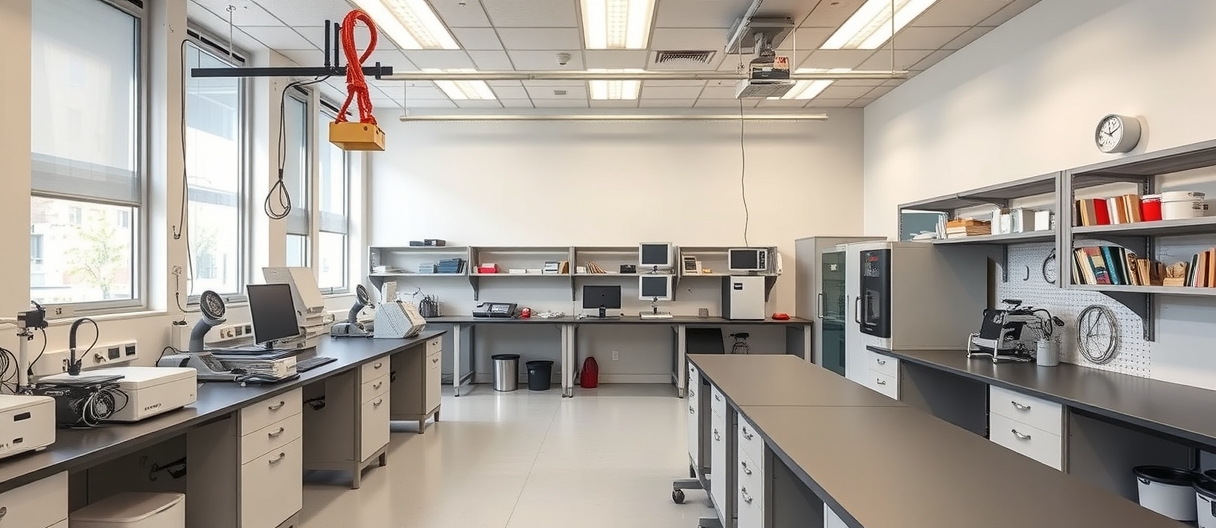
MS in Mechanical Engineering in Germany is an interdisciplinary course that applies the principles of engineering, physics and materials science to the analysis, design, manufacture and maintenance of mechanical systems.
In Germany a master's degree in mechanical engineering is awarded after completing a bachelor's degree in mechanical engineering or a related field. Some universities also require an aptitude test. German universities accept applications for master's degrees in both the winter and summer semesters.
- Most German public universities remain tuition-free for master's programmes, charging only a semester contribution of roughly 100 to 350 euros
- From winter 2024/25 the Technical University of Munich charges non-EU master's students 4,000 to 6,000 euros per semester, and Baden-Wurttemberg universities such as Stuttgart and KIT charge non-EU students 1,500 euros per semester
- For the 2026 student visa applicants must show 11,904 euros in a blocked account, equal to 992 euros per month.
Why Study MS in Mechanical Engineering in Germany?
Germany combines world-class engineering education with very low costs. Most public universities charge no tuition beyond a small semester fee, and the country is Europe's automotive and manufacturing heartland. Strong industry links, English-taught master's programmes, generous scholarships and an 18-month post-study job-seeker visa make it a top choice for Indian mechanical engineers.
Some of the key reasons to choose Germany are listed below:
- Germany hosts several of the world's top-ranked engineering universities, including TUM, RWTH Aachen and KIT.
- Most public universities charge no tuition fees; students pay only a semester contribution of about 100 to 350 euros.
- Germany is Europe's largest economy and a global hub of the automotive, machinery and manufacturing industries.
- Many master's programmes are taught fully in English, so German is not always mandatory for admission.
- An 18-month post-study residence permit lets graduates stay and search for jobs after completing the degree.
- Mechanical engineers work across aerospace, railway, automotive, defence, energy, chemicals, marine and electronics sectors.
How Do You Apply for an MS in Germany?
To apply, first check each university's eligibility, then sit any required tests such as IELTS, TOEFL or GRE. Prepare transcripts, a statement of purpose and letters of recommendation. Apply either directly to the university or through uni-assist. Winter-semester applications usually open in the preceding autumn and close between May and July.
The application process for postgraduate courses in Germany is broadly similar to the undergraduate process. Essentially, these are the steps you should follow:
- Check the eligibility criteria for each university beforehand.
- Register for the required tests and prepare well in advance.
- Assemble a document packet with transcripts, a statement of purpose, letters of recommendation and certified test scores.
- Check whether the university is a member of uni-assist; if so, apply through uni-assist, otherwise apply directly to the university.
- Winter-semester admissions usually open in autumn and close between May and July.
- Universities typically confirm admission by early July, leaving time for visa processing.
- Arrange proof of finances for at least the first year alongside your applications, as it is needed for the German student visa.
Core admission requirements include a bachelor's degree in mechanical engineering or a related field and proof of English proficiency through TOEFL iBT or IELTS.
Top German Universities for MS in Mechanical EngineeringRead →Which Are the Top Universities for MS in Mechanical Engineering in Germany?
Germany's leading universities for mechanical engineering are the Technical University of Munich, RWTH Aachen, Karlsruhe Institute of Technology, the University of Stuttgart and TU Darmstadt. All rank highly in the QS World University Rankings 2026 and offer master's programmes in mechanical, process and production engineering, many with strong industry and research collaboration.
The table below lists the top mechanical engineering universities in Germany with their current QS World University Rankings 2026 positions:
| University (2026) | QS World Rank 2026 | Master's Course Offered |
|---|---|---|
| Technical University of Munich | 22 | MSc Mechanical Engineering |
| Karlsruhe Institute of Technology | 98 | MSc Mechanical Engineering |
| RWTH Aachen University | 105 | MSc Mechanical Engineering |
| TU Darmstadt | 241 | MSc Mechanical and Process Engineering |
| University of Stuttgart | 310 | MSc Mechanical Engineering |
What Is the Eligibility for MS in Mechanical Engineering in Germany?
German universities set their own admission criteria. Typically you need a recognised bachelor's degree in mechanical or a related engineering field, usually four years long, with a strong grade average. Applicants must also prove English proficiency through IELTS or TOEFL, and some German-taught programmes require a German-language certificate such as TestDaF or DSH.
The typical eligibility requirements for an MS in mechanical engineering are:
- A recognised bachelor's degree in mechanical engineering or a related field, usually four years long, with a strong grade average.
- Some universities accept a three-year degree; to confirm, contact the international admissions office to get your qualification recognised or check through uni-assist.
- Proof of English proficiency through IELTS or TOEFL for English-taught programmes.
- A German-language certificate for German-taught programmes, such as DSH, TestDaF, the Goethe Institute test or telc Deutsch Hochschule.
Students must also submit supporting documents to secure admission. The documents typically required for an MS in Germany are: official high-school and graduate transcripts, a valid passport, proof of funds, an acceptance letter, proof of English proficiency, a resume, letters of recommendation, a statement of purpose and passport-sized photographs.
What Are the Fees for MS in Mechanical Engineering in Germany?
Most German public universities charge no tuition for master's programmes; students pay only a semester contribution of about 100 to 350 euros. Exceptions apply: Baden-Wurttemberg universities such as Stuttgart and KIT charge non-EU students 1,500 euros per semester, while TUM now charges non-EU master's students 4,000 to 6,000 euros per semester.
The table below summarises the 2026 tuition position for non-EU students at some of Germany's top mechanical engineering universities:
| University (2026) | Non-EU Tuition per Semester 2026 |
|---|---|
| Technical University of Munich | EUR 4,000-6,000 |
| Karlsruhe Institute of Technology | EUR 1,500 (Baden-Wurttemberg) |
| University of Stuttgart | EUR 1,500 (Baden-Wurttemberg) |
| RWTH Aachen University | No tuition; semester contribution only |
| TU Darmstadt | No tuition; semester contribution only |
How Much Does It Cost to Study MS in Germany?
Beyond tuition, budget for pre-arrival and living costs. For the 2026 student visa you must show 11,904 euros in a blocked account, equal to 992 euros per month. Typical monthly living costs of 950 to 1,200 euros cover rent, food, transport, health insurance and other essentials, with Munich being the most expensive city.
Pre-arrival expenses include test fees, the visa fee and travel. Indicative amounts are:
- Programme application fee: about 75 to 130 euros
- German student visa fee: about 75 euros
- Health insurance: roughly 1,300 euros per year
- IELTS or TOEFL test fee: about 230 to 260 euros
- Airfare: about 250 to 600 euros
Living expenses are dominated by rent, food, transport and health insurance. The blocked-account requirement of 11,904 euros per year, or 992 euros per month, is set by the German government to reflect a realistic annual living budget for a student.
MBA in Germany Without GMATRead →What Jobs and Salary Follow an MS in Mechanical Engineering in Germany?
Mechanical and plant engineering is one of Germany's biggest industrial sectors, employing over a million people across thousands of companies. Graduates find roles in automotive, aerospace, machinery, energy and research. Average mechanical-engineer salaries range from about 52,000 to 60,000 euros per year, rising well above 80,000 euros with experience and seniority.
Mechanical and plant engineering is one of Germany's most important industries, employing more than a million people and ranking among the country's largest industrial sectors by revenue. Mechanical engineers therefore have ample employment opportunities across the German economy.
Salary in Germany after MS in Mechanical Engineering
The average gross salary for a mechanical engineer in Germany is roughly 52,000 to 60,000 euros per year. Fresh graduates typically start around 50,000 euros, while experienced and senior engineers can earn well above 80,000 euros, with the highest pay in cities such as Munich and Stuttgart.
Which Scholarships Are Available for Masters in Mechanical Engineering in Germany?
International students can fund their studies through several scholarships. The DAAD is Germany's largest funding body and offers monthly living stipends for master's students, while the Deutschlandstipendium provides 300 euros per month. Political foundations such as Heinrich Boll and Konrad-Adenauer also support postgraduates. Germany's low tuition combined with these grants makes it very affordable.
Some of the best scholarships for international postgraduate students in Germany include:
- DAAD (Deutscher Akademischer Austauschdienst): monthly living stipends for postgraduate students, typically requiring a bachelor's degree and, for some programmes, relevant work experience.
- Deutschlandstipendium National Scholarship Programme: 300 euros per month, jointly funded by the federal government and private sponsors, awarded for academic and social merit.
- Heinrich Boll Foundation Scholarships: monthly stipends for students at state or state-approved institutions who demonstrate strong academics and commitment to values such as human rights.
- Konrad-Adenauer-Stiftung Scholarships: stipends for international students who have completed a bachelor's degree, awarded on academic and personal merit.
- RISE Germany (Research Internships in Science and Engineering): funded summer research internships for undergraduate science and engineering students.
What Are the German Student Visa Requirements?
Non-EU students need a German student visa, which costs 75 euros and takes several weeks to process. The most important requirement is proof of finances: you must deposit 11,904 euros in a blocked account for 2026. You also need an admission letter, valid passport, health insurance, academic transcripts and proof of language proficiency.
- A completed application form with a cover letter stating the purpose and duration of your stay
- A valid passport and two recent photographs
- An acceptance letter from a German university
- Academic transcripts and records
- A certificate of German or English language proficiency as required by your programme
- Proof of valid private or public health insurance
- Proof of finances, currently 11,904 euros in a blocked account for the 2026 intake
- A declaration of the authenticity of the documents submitted