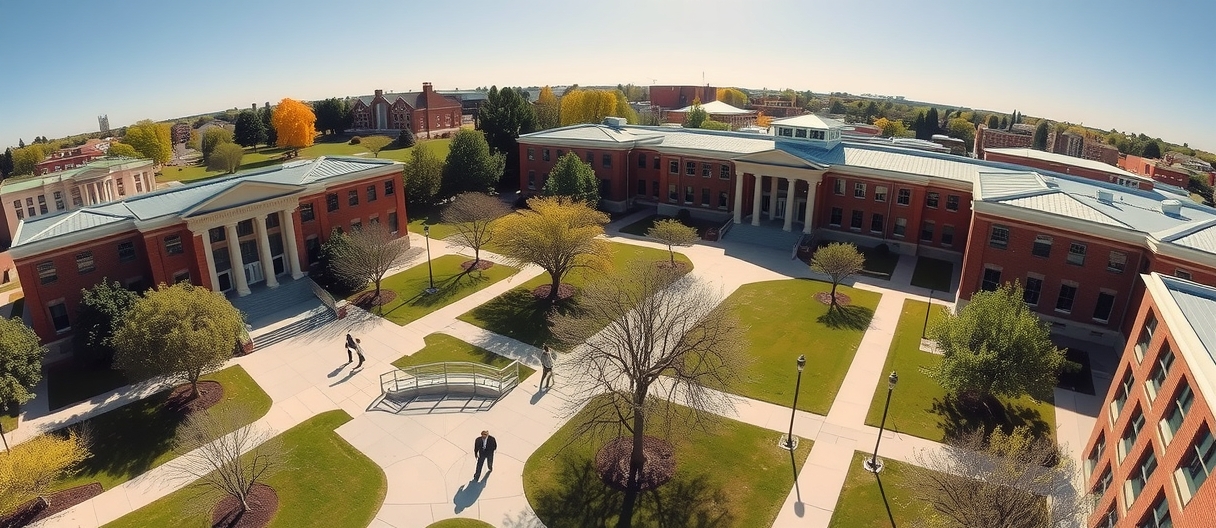
- NUS is ranked 8th worldwide and 1st in Asia, while NTU is ranked 12th globally in the QS World University Rankings 2026
- Singapore has six autonomous public universities
- NUS international master's tuition runs about S$40,000 to S$60,000 for the full programme, inclusive of 9 percent GST, and the Student's Pass carries a S$45 processing fee plus a S$60 issuance fee through the ICA SOLAR portal.
Why Study MS in Singapore?
Singapore hosts six autonomous public universities, including NUS ranked eighth worldwide and NTU ranked twelfth in the QS World University Rankings 2026. International students choose it for research strength, English-medium teaching, strong graduate employability, safety, and proximity to Asian job markets, making it a leading destination for a master of science degree.
Singapore is a developed, multicultural republic in Southeast Asia and one of the world's safest countries, which makes it a comfortable base for international students. Despite its small size, it is a globally reputed destination for quality education and research, combining educational excellence, a high standard of living, and a diverse student community.
- One of the world's best higher education systems with strong research output
- Ranked among the safest countries globally
- English-medium instruction across public universities
- Excellent graduate employability and access to Asian job markets
- High quality of life and a multicultural student community
Which Are the Best Universities for MS in Singapore?
The National University of Singapore and Nanyang Technological University lead for MS programmes, ranked eighth and twelfth globally in QS 2026. Singapore Management University, Singapore University of Technology and Design, Singapore Institute of Technology, and Singapore University of Social Sciences complete the six autonomous universities, alongside private options like MDIS and TUM Asia.
The duration and curriculum of a master's degree vary by institution, with some MS programmes lasting one year and others two years. MS degrees are available across a wide range of fields, from science and engineering to business and law. The list below covers the leading options for MS study in Singapore.
- National University of Singapore (NUS) - ranked 8th in the world and 1st in Asia in QS 2026, with strong science, engineering, and technology master's programmes
- Nanyang Technological University (NTU) - ranked 12th globally in QS 2026, known for engineering and technology research
- Singapore Management University (SMU) - a specialised university strong in business, finance, and social sciences
- Singapore University of Technology and Design (SUTD) - a design-centric autonomous university established in 2009
- Singapore Institute of Technology (SIT) - offers applied, industry-focused degrees
- Singapore University of Social Sciences (SUSS) - the sixth autonomous university, focused on social sciences and applied education
- TUM Asia - the Singapore campus of the Technical University of Munich, offering seven MS programmes since 2002 in partnership with NUS and NTU
- Private institutions such as MDIS, PSB Academy, Kaplan, and James Cook University Singapore also offer master's programmes
How Much Does an MS in Singapore Cost?
MS tuition for international students at NUS ranges from roughly S$40,000 to S$60,000 for the full programme, inclusive of nine percent GST, for the 2026/27 intake. Living costs add about S$1,500 to S$2,500 monthly covering accommodation, food, transport, and books. Total costs vary widely by university and specialisation chosen.
Singapore offers a high quality of life, and MS tuition varies from college to college. Fees are on the higher side but are widely considered justifiable given the quality of education and career exposure. The table below outlines the typical cost of pursuing a master's degree in Singapore.
| Expense (2026) | Estimated Cost (SGD) |
|---|---|
| MS tuition (international, full programme) | S$40,000 - S$60,000 |
| Accommodation | S$700 - S$1,500 / month |
| Food | S$300 - S$500 / month |
| Transport | S$100 - S$150 / month |
| Books and supplies | S$100 - S$150 / month |
| Student's Pass (processing plus issuance) | S$105 one-time |
For an international student, monthly living expenses in Singapore, including accommodation, food, transport, and books, typically range from about S$1,500 to S$2,500. Costs vary by lifestyle and choice of accommodation, with on-campus or subsidised housing generally cheaper than private rentals.
How to Write an SOP for MS in CSRead →What Are the Eligibility Requirements for MS in Singapore?
Applicants need a recognised bachelor's degree, usually with a strong academic record above fifty-five percent aggregate or an equivalent GPA. Public universities require English proficiency proof through IELTS or TOEFL. Many science, engineering, and business master's programmes also ask for GRE or GMAT scores, and some prefer relevant work experience.
- A recognised bachelor's degree, generally with above 55 percent aggregate or an equivalent GPA
- Strong academic records in 10th and 12th standard
- English proficiency proof through IELTS or TOEFL
- GRE or GMAT scores for many science, engineering, and business programmes
- Relevant work experience preferred for some professional master's courses
How Do You Apply for MS in Singapore?
Students apply online through each university's admissions portal, usually during the final year of their bachelor's or after graduation. You select a programme, submit transcripts, English test scores, statement of purpose, and recommendation letters, then pay the application fee. Meeting minimum eligibility does not guarantee admission, as places remain highly competitive.
- Shortlist universities and MS programmes that match your background and goals
- Prepare transcripts, English test scores, statement of purpose, and recommendation letters
- Apply online through each university's admissions portal before the deadline
- Pay the application fee and track your application status
- Accept your offer, pay the acceptance fee, and apply for a Student's Pass
What Documents Are Required for MS in Singapore?
Required documents typically include tenth and twelfth grade transcripts and certificates, bachelor's transcripts and degree certificate, proof of English proficiency such as IELTS or TOEFL, a valid passport, financial documents showing funding ability, a statement of purpose, and letters of recommendation. Some programmes also request GRE or GMAT scorecards.
- 10th and 12th grade transcripts and certificates
- Bachelor's transcripts and degree certificate
- Proof of English proficiency (IELTS or TOEFL)
- GRE or GMAT scorecards, where required
- Valid passport
- Financial documents showing sufficient funds
- Statement of purpose and letters of recommendation
What Scholarships Are Available for MS in Singapore?
Several scholarships help international students fund an MS in Singapore, including the ASEAN Scholarship for member-state nationals and university-specific research and merit awards from NUS, NTU, and SMU. Graduate research scholarships often cover tuition plus a monthly stipend. Competition is intense, so apply early with strong academics and a clear research fit.
- ASEAN Scholarship for nationals of ASEAN member states
- NUS Research Scholarships and graduate merit awards
- NTU Research Scholarships covering tuition and a monthly stipend
- SMU postgraduate scholarships and financial aid
- University-specific and government-linked awards, most of which are highly competitive
How Do You Get a Singapore Student Pass?
International students studying full-time in Singapore need a Student's Pass issued by the Immigration and Checkpoints Authority. Your university initiates the application through the SOLAR portal after admission. The processing fee is S$45 and the issuance fee S$60. Apply two to three months before your course starts and complete formalities after arrival.
- Your university initiates the Student's Pass application through the ICA SOLAR portal after you accept admission
- Apply at least two months but not more than three months before your course begins
- Pay the S$45 processing fee within seven days of eForm 16 submission
- Receive an In-Principle Approval (IPA) letter, which includes a single-journey visa
- Pay the S$60 issuance fee and complete formalities at an ICA Services Centre after arrival
- A medical examination report is required for courses longer than six months
What Are the Popular MS Specialisations in Singapore?
Singapore's most sought-after MS specialisations include data science and analytics, computer science, finance, mechanical and civil engineering, chemistry, and biotechnology. NUS and NTU dominate science and engineering fields, while SMU and international campuses such as ESSEC and INSEAD lead finance. These specialisations align with Singapore's technology-driven and finance-focused economy.
These fields align with Singapore's strong technology, engineering, and finance sectors, offering good career prospects for graduates. The specialisations below are among the most in-demand for international MS applicants.
- Data science and analytics (NTU MSc Analytics, SMU, Singapore Polytechnic)
- Computer science and computing (NUS Master in Computing, NTU)
- Finance (NUS MSc Finance, SMU MSc Applied Finance, INSEAD, ESSEC)
- Mechanical and civil engineering (NUS, NTU)
- Chemistry and industrial chemistry (NUS, TUM Asia)
- Biotechnology (MDIS, PSB Academy, Singapore Polytechnic, Nanyang Polytechnic)