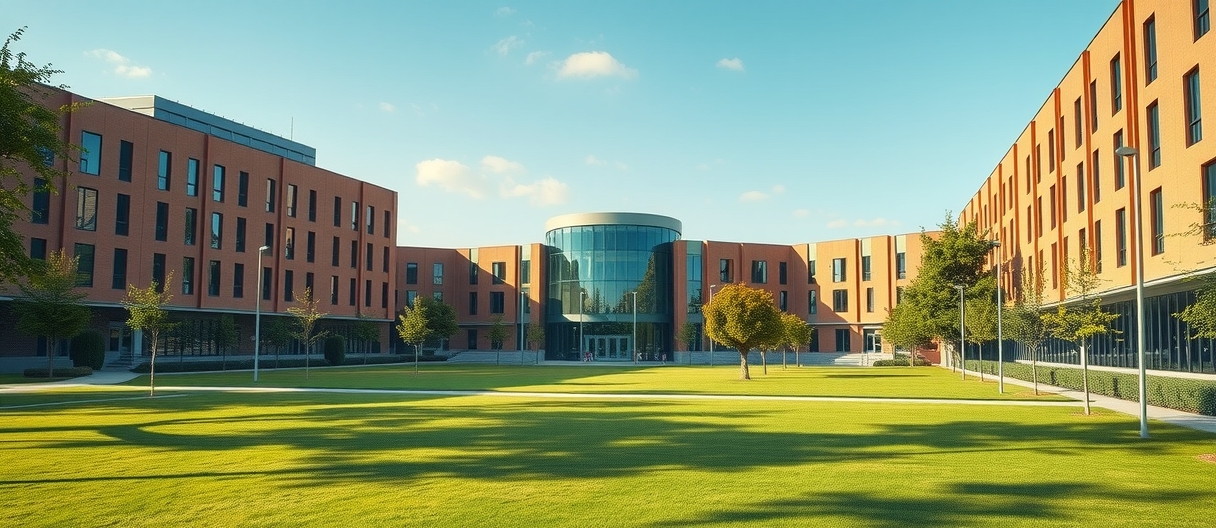
- Public medical universities in Germany are tuition-free except in Baden-Wurttemberg, where non-EU students pay 1,500 EUR per semester at universities such as Heidelberg, Freiburg, Tubingen and KIT
- Germany awards the State Examination (Staatsexamen), not an MBBS, over about six years and three months, taught mainly in German requiring C1 proficiency
- Indian students must qualify NEET and later clear the FMGE or NExT to practise in India.
Germany is one of the most popular destinations for international medical education, thanks to world-class research, strong clinical training and public universities that charge little or no tuition. This guide explains the top medical colleges in Germany, their fees, the courses on offer, eligibility requirements and scholarships for Indian and international students in 2026.
Which Are the Top Medical Colleges in Germany?
Germany hosts several world-class medical universities that rank among the best globally. The Technical University of Munich, LMU Munich, Heidelberg University and RWTH Aachen lead the QS World University Rankings 2026, offering human medicine, dentistry and biomedical sciences. Most are public institutions combining strong research output with clinical training and low or no tuition fees.
| University 2026 | QS World Rank 2026 | Key Medical Programmes |
|---|---|---|
| Technical University of Munich | 22 | Human Medicine, Biomedical Neuroscience, Medical Life Science |
| LMU Munich | 58 | Human Medicine, Dentistry |
| Heidelberg University | 80 | Medicine, MSc International Health, Molecular Medicine |
| RWTH Aachen University | 105 | Medicine, Dentistry, Biomedical Engineering |
| University of Freiburg | 201 | Medicine, Dental Medicine, Molecular Medicine |
| University of Tubingen | 215 | Medicine, Molecular Medicine, Neurosciences |
These universities combine internationally ranked research with strong clinical training. Heidelberg, founded in 1386, is Germany's oldest university and a leading medical research centre, while the Technical University of Munich and LMU Munich anchor Bavaria's medical education and win a place among the top 60 universities worldwide.
MBBS in Germany: complete guideRead →Can Indian Students Study Medicine in Germany?
Yes. Indian students can study medicine in Germany at public and private universities. Since 2020 the National Medical Commission replaced the Medical Council of India, and students must qualify NEET before pursuing a primary medical qualification abroad. After graduating, they must clear the FMGE screening test, soon the NExT, to practise medicine in India.
Germany awards the State Examination (Staatsexamen) in medicine rather than an MBBS degree. The course runs about six years and three months across thirteen semesters, taught almost entirely in German, so applicants need C1-level German proficiency through TestDaF, DSH-2 or telc C1 Hochschule. On qualifying, graduates receive the Approbation licence to practise in Germany. Indian students returning home must pass the FMGE, and eventually the NExT, for registration with a state medical council.
Study in Germany: fees and requirementsRead →How Much Does It Cost to Study Medicine in Germany?
Studying medicine at public German universities is largely tuition-free. Students pay only a semester contribution of roughly 100 to 350 EUR covering administration and transport. The main exception is Baden-Wurttemberg, where non-EU students pay 1,500 EUR per semester at Heidelberg, Freiburg, Tubingen, Stuttgart and KIT. Bavarian universities also introduced non-EU tuition from winter 2024.
Because public universities charge little or no tuition, the largest expenses for international medical students in Germany are living costs and the blocked account required for the student visa. The blocked account (Sperrkonto) must hold 11,904 EUR for one year, about 992 EUR per month, and the national (D) visa fee is 75 EUR. Living costs average 900 to 1,200 EUR per month.
| Fee Type 2026 | Amount (EUR) | Notes |
|---|---|---|
| Tuition (most public universities) | 0 | Only the semester contribution applies |
| Baden-Wurttemberg non-EU tuition | 1,500 per semester | Heidelberg, Freiburg, Tubingen, KIT, Stuttgart |
| Semester contribution | 100 - 350 | Administration and transport pass |
| Blocked account (Sperrkonto) | 11,904 per year | About 992 per month, visa requirement |
| National (D) student visa | 75 | One-time application fee |
What Courses Do Medical Colleges in Germany Offer?
Medical universities in Germany offer far more than human medicine. Undergraduate options include Bachelor programmes in molecular medicine, health sciences, biomedical engineering and dentistry. Postgraduate degrees cover MSc programmes in molecular medicine, medical neuroscience, health economics and biomedical engineering. Doctoral programmes span neuroscience, infection biology, molecular medicine and pharmacology, many of them tuition-free and research-intensive.
Below are popular medical and health-science programmes offered across undergraduate, postgraduate and doctoral levels at medical colleges in Germany.
- Undergraduate: BSc Molecular Medicine
- Undergraduate: BSc International Health Sciences
- Undergraduate: BSc Health Informatics
- Undergraduate: BSc Biomedical Engineering
- Undergraduate: Bachelor of Dental Medicine
- Undergraduate: BSc Nursing Science
- Postgraduate: MSc Molecular Medicine
- Postgraduate: MSc Medical Neurosciences
- Postgraduate: MSc Health Economics
- Postgraduate: MSc Biomedical Engineering
- Postgraduate: MBA Healthcare Management
- Postgraduate: MSc Nutrition and Biomedicine
- Doctoral: PhD Neuroscience
- Doctoral: PhD Infection Biology
- Doctoral: PhD Molecular Medicine
- Doctoral: PhD Cardiovascular Science
- Doctoral: PhD Pharmacy and Molecular Biotechnology
What Are the Eligibility Requirements for Medicine in Germany?
Undergraduate medicine applicants need a strong higher-secondary record in physics, chemistry, biology and mathematics, plus C1 German through TestDaF, DSH-2 or telc C1. Indian students must also qualify NEET. Postgraduate and doctoral entry requires a relevant bachelor or master degree, sometimes IELTS 6.5 to 7.0 or TOEFL, and for research programmes a project proposal and CV.
- Higher-secondary certificate with strong grades in Physics, Chemistry, Biology and Mathematics
- NEET qualification for Indian students pursuing a primary medical qualification abroad
- German proficiency at C1 level: TestDaF (TDN 4x4), DSH-2 or telc C1 Hochschule
- English proficiency where required: IELTS 6.5 to 7.0 or TOEFL 80 to 90 for English-taught postgraduate courses
- For postgraduate entry: a relevant bachelor degree, often with a minimum 70 percent or equivalent GPA
- For doctoral entry: a research proposal, CV and, for some programmes, GRE scores
Which Scholarships Are Available for Medical Students in Germany?
Several scholarships help international medical students in Germany cover living costs, since tuition is mostly free. The DAAD scholarships, Erasmus+, Heinrich Boll Foundation, Konrad-Adenauer-Stiftung and the Deutschlandstipendium are the best known. Most provide monthly stipends of around 300 to 1,200 EUR plus allowances for travel, research or study materials, awarded on academic merit and need.
| Scholarship 2026 | Provider | Typical Benefit |
|---|---|---|
| DAAD Scholarships | German Academic Exchange Service | Monthly stipend plus travel and insurance |
| Deutschlandstipendium | Participating German universities | 300 EUR per month |
| Heinrich Boll Foundation | Heinrich Boll Foundation | Monthly stipend plus allowances |
| Konrad-Adenauer-Stiftung | Konrad-Adenauer-Stiftung | Monthly stipend for merit students |
| Erasmus+ | European Union | Mobility grant for exchange periods |
How Is the Medicine Course Structured in Germany?
Medical study in Germany lasts about six years and three months and is divided into four stages. The pre-clinical phase covers two years of basic sciences, followed by a three-year clinical phase of applied medicine. A practical final year (Praktisches Jahr) provides hospital training, and the concluding State Examination grants the Approbation licence to practise.
- Stage 1 - Pre-clinical phase: two years (four semesters) covering the fundamentals of science and medicine, ending with the first State Examination (Physikum).
- Stage 2 - Clinical phase: three years (six semesters) of core clinical subjects taught through lectures, seminars, practicals and internships.
- Stage 3 - Practical year (Praktisches Jahr): one year of clinical training in internal medicine, surgery and an elective, providing hands-on hospital experience.
- Stage 4 - State Examination: the final nationally standardised exam; passing it lets graduates apply for the Approbation licence and practise as a doctor.