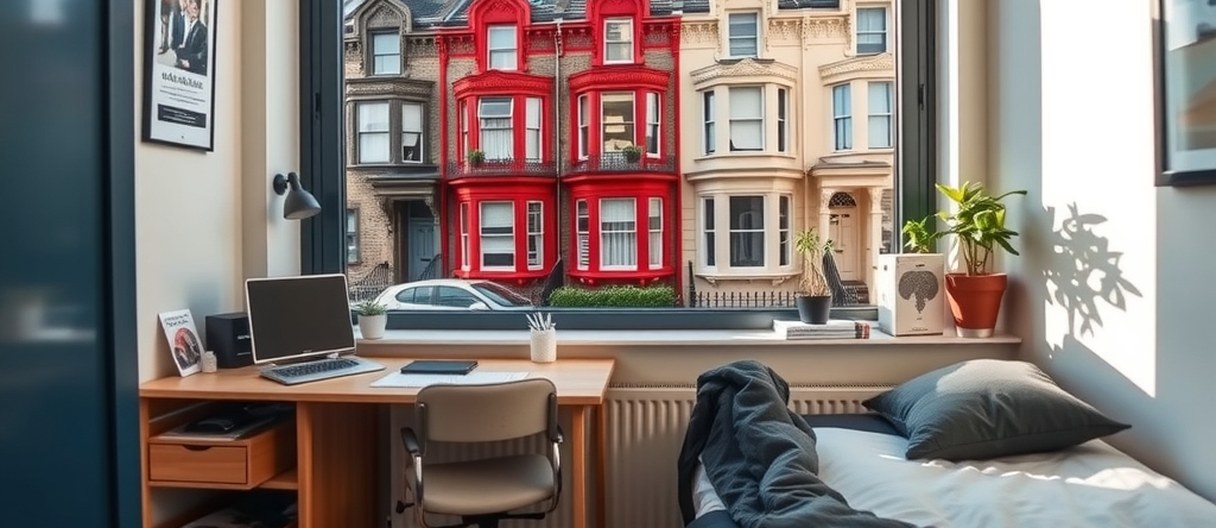
Finding a room is often the hardest part of moving to Ireland. Student housing is in short supply in Dublin, Cork and Galway, and the Embassy of India in Dublin has warned Indian students about rental scams. This guide explains the types of student accommodation in Ireland, what universities themselves say rooms cost, when to apply, your rights as a renter and how to avoid fraud, using official university, Residential Tenancies Board and Embassy pages read at the time of writing.
- University of Galway currently puts a single room in a shared house at about 700 to 1,200 euros a month, and UCC says most private renters in Cork pay 650 to 850 euros a month
- The Residential Tenancies Board says a landlord cannot ask for a deposit of more than one month's rent.
What Types of Student Accommodation Are There in Ireland?
Indian students in Ireland usually choose between university residences on campus, private purpose-built student accommodation, a room in a shared house or apartment, and digs, where you rent a room in a family home. Homestays through language schools are another option for short courses. Each differs in cost, contract length and how easy it is to book.
- On-campus residences: run by the university, often fully booked early and sometimes allocated by lottery
- Private student complexes: purpose-built blocks near campus, usually more expensive, with fixed academic-year contracts
- Shared house or apartment: a private landlord, often the cheapest option per month
- Digs: a room in a family home, often with bills and some meals included
- Homestay: arranged through a provider, mainly for language and short courses
How Much Does Student Accommodation in Ireland Cost?
Costs depend mainly on the city. UCC lists campus rooms in Cork from about 3,816 to 8,585 euros for the academic year, while Trinity College Dublin estimates a postgraduate's yearly housing at 9,000 to 11,000 euros privately and 13,200 to 16,000 euros in purpose-built accommodation.
| University figure | Cost | What it covers |
|---|---|---|
| Trinity College Dublin, campus rooms for postgraduates | From 185 euros a week | 240 nights, very few rooms |
| Trinity, postgraduate private rented housing | 9,000 to 11,000 euros a year | Yearly estimate |
| Trinity, purpose-built student housing | 13,200 to 16,000 euros a year | Yearly estimate |
| UCC, campus accommodation | 3,816 to 8,585 euros | Academic year |
| UCC, private student complexes | 4,600 to 20,710 euros | Academic year |
| UCC, house shares and digs | 650 to 850 euros a month | Typical private rent |
| University of Galway, room in shared house | 700 to 1,200 euros a month | Private rent |
| University of Galway, digs | 150 to 250 euros a week | Often includes bills |
| University of Limerick, campus and off-campus villages | 5,230 to 8,012 euros | Undergraduate academic year |
| University of Limerick, postgraduate villages | 7,473 to 10,025 euros | 51 weeks |
These figures come from each university's own pages, as per the official sites at the time of writing. Some are labelled indicative and are confirmed each summer, so treat them as a planning range. Dublin is the most expensive city, and rooms within walking distance of campus cost the most.
Cost of living in Ireland for Indian studentsRead →Is On-Campus Accommodation Available for International Students?
Yes, but places are limited and rarely guaranteed for postgraduates. Trinity says the number of campus rooms for postgraduates is very small and advises them to look for private housing. UCC allocates campus rooms through a lottery that is open for one month a year, and later applicants usually join a waiting list.
Trinity also lists third-party residences for postgraduates. Kavanagh Court is listed at 325 euros a week on a 38-week contract, and Here! Cork Street at 303 to 349.50 euros a week on 41 or 51-week contracts, with limited rooms at both. The University of Limerick's residences ask for a 500 euro deposit, with monthly instalments after that.
When Should You Start Looking for Accommodation in Ireland?
Start as soon as you accept your offer, ideally in January or February for a September start. University of Galway says campus and off-campus residences open applications in February for the following September. UCC advises searching from early January, because many options are gone by the end of February.
- January to February: apply for campus and private student residences
- March to May: more private rentals appear, according to UCC
- Summer: digs are most plentiful, and Galway suggests arriving early to arrange viewings
- Book a short temporary stay if your long-term room is not confirmed before you fly
Where Can You Find Student Rooms in Ireland?
Start with your university's accommodation office and its official StudentPad listings, which UCC and University of Galway recommend. Public sites such as Daft.ie, Rent.ie and MyHome.ie also list rooms. The Embassy of India also advises using your college's accommodation office for vetted landlords and listings.
UCC's StudentPad is limited to prospective and current UCC students, and UCC asks students to send it screenshots of any advert or contact that seems wrong. Students' unions also run accommodation help and social media groups, but treat any offer from a group as unverified until you have seen the room.
What Are Your Rights as a Student Renter in Ireland?
Under Residential Tenancies Board rules, a landlord cannot ask for a deposit of more than one month's rent. In most tenancies, the RTB says you cannot be asked for more than two months' rent in total; check rtb.ie for current rules. Deductions are allowed only for arrears, unpaid bills or damage beyond normal wear and tear.
- Deposit: no more than one month's rent
- Return: the deposit must be returned as soon as possible after the tenancy ends, unless the landlord has a legal reason to keep some of it
- Student-specific accommodation: you can only choose to pay more than one month in advance if you pay rent and tuition to the same provider and the landlord agrees
- Student-specific accommodation leases over 41 weeks can be reported to the RTB
- Digs and rent-a-room in a home where an individual landlord lives generally do not need RTB registration (check rtb.ie)
- Disputes: the RTB runs a dispute resolution service for registered tenancies
Because digs are outside most tenancy rules, agree the rent, notice period and house rules in writing before you move in. If you are unsure whether a contract is fair, ask your university's accommodation office or students' union to look at it before you sign. They see the same problems every year and can tell you whether a clause is normal.
How Can Indian Students Avoid Accommodation Scams in Ireland?
Never pay a deposit or rent before you have seen the property and signed an agreement. The Embassy of India in Dublin has advised students that the housing shortage has led to some being cheated, so read its student advisory. University of Galway adds that a genuine landlord will not ask for cryptocurrency or wire transfers.
- View the room in person, or ask a trusted friend or the university to check it
- Pay the deposit to the landlord, not to the person leaving the property
- Get a written receipt for every payment
- Be wary of offers that demand immediate payment or look far cheaper than similar rooms
- Report a scam to your local Garda station and to your university
What Should You Check Before Signing a Lease?
Check the total rent, what bills are included, the contract length, the deposit amount and how it will be returned. Confirm the room matches the photos and is safe and warm. For student residences, check the move-in and move-out dates, because many contracts end in May or June.
- Rent per week or month and the payment schedule
- Bills included or extra: electricity, heating, internet and bins
- Contract dates and the notice needed to leave early
- Deposit amount and the conditions for return
- Inventory and photos of any existing damage
Keep copies of the lease, receipts and messages. If you live in a private tenancy, ask whether it is registered with the RTB, because registration gives you access to its dispute service.
How Can You Lower Your Accommodation Costs in Ireland?
Share a larger house with classmates, live a short bus ride from campus instead of next to it, and compare digs, which often include bills. Choosing Cork, Galway or Limerick instead of Dublin can also cut rent sharply. Ask your university about cheaper twin or non-ensuite rooms.
Build your housing budget from your university's own figures, add a buffer for winter heating and keep enough savings for the deposit and the first month's rent before you travel. If your long-term room starts after you arrive, book a short stay for the first one or two weeks so you can attend viewings in person, which is the safest way to rent a private room.
Ireland student visa process: documents and fundsRead →