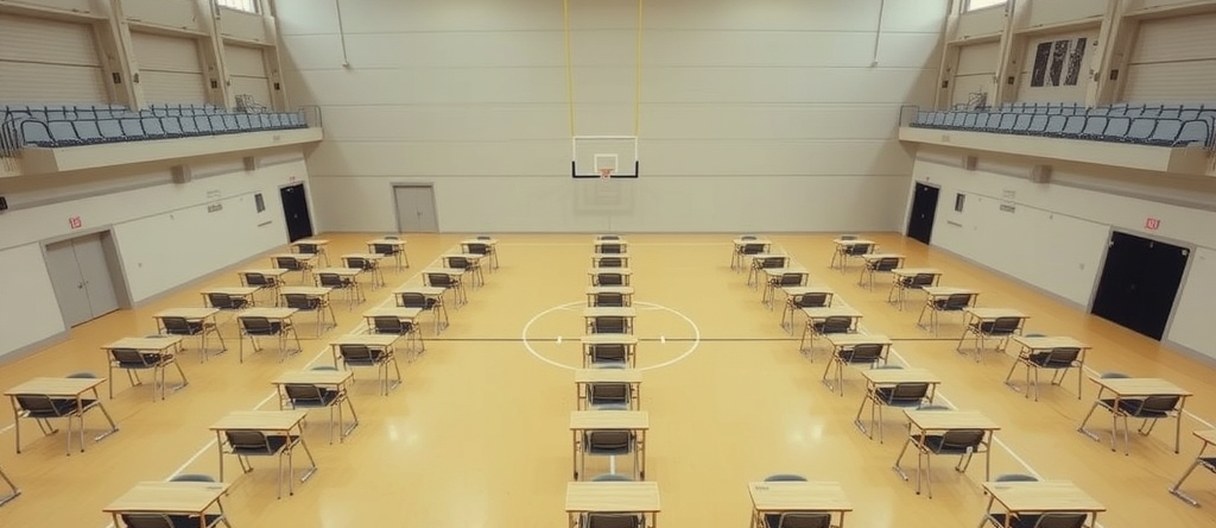
Every year, students ask which exam is the hardest to crack. There is no official ranking, but some exams are objectively tougher than others: they select a tiny share of candidates, test years of preparation, or have low pass rates even among well-prepared students. This guide compares the toughest exams in the world, including the GRE, GMAT and USMLE that matter for study abroad, using official figures checked on 28 October 2026.
- UPSC recommended 958 candidates from the Civil Services Examination 2025, from more than 9.3 lakh applicants
- In JEE Advanced 2026, 56,880 of the 1,79,694 candidates who sat both papers qualified, according to the official press release
- The SRA reports a 42 percent pass rate for the July 2026 SQE1
- ETS gives a GRE score range of 130 to 170 per section.
What Are the Toughest Exams in the World?
The toughest exams in the world include India's UPSC Civil Services exam, JEE Advanced and the CA Final, the US medical licensing exam (USMLE), professional exams such as the CFA and the UK solicitors' SQE, and graduate admission tests such as the GMAT and GRE at the highest score levels. Each is tough for a different reason.
| Toughest exams 2026 | Why it is tough | Key figure |
|---|---|---|
| UPSC Civil Services (India) | Tiny selection rate, three stages | 958 recommended from 9.3 lakh+ applicants (CSE 2025) |
| JEE Advanced (India) | Very high competition for IIT seats | 56,880 qualified of 1,79,694 who sat (2026) |
| CA Final (India) | Low pass rates on a vast syllabus | 14.07 percent passed both groups (May 2026) |
| USMLE Step 1 (USA) | Huge medical syllabus; harder for IMGs | Pass or fail; lower first-time pass for international graduates |
| SQE1 (England and Wales) | Large legal syllabus, applied questions | 42 percent pass rate, all candidates (July 2026) |
| GMAT and GRE (global) | Hard at the top score bands | GRE 130 to 170 per section; GMAT Focus 205 to 805 |
Selection rates and pass rates measure different things. UPSC and JEE are competitive selection exams with limited seats, so even strong candidates miss out. The CA Final, SQE and USMLE are qualifying exams where you need to reach a standard, but large syllabuses keep pass rates low.
Hardest Degrees in the World (2026): Ranked and ExplainedRead →Which Is the Toughest Exam in the World?
By selection rate, India's UPSC Civil Services exam is often called the toughest exam in the world: of more than 9.3 lakh applicants for CSE 2025, only 958 were recommended, roughly one in a thousand. By pass rate on a qualifying exam, the CA Final, where 14.07 percent passed both groups in May 2026, is among the hardest.
Other exams compete for the title in their own fields. China's gaokao is taken by millions each year, the USMLE is a long and expensive gateway for international doctors, and top-tier GMAT scores are rare. What makes an exam toughest for you depends on the subject, your preparation time and how many attempts you can afford.
How Hard Is the GRE for Indian Students?
The GRE is not hard to pass, because there is no pass mark, but high scores are competitive. ETS scores Verbal and Quantitative Reasoning from 130 to 170 each. Its 2024-25 guide gives mean scores of about 151 in Verbal and 157 in Quant. Indian students often score well in Quant, so top programmes expect high Quant scores.
The GRE is optional or waived at many US universities for some programmes, but a strong score still helps if your grades are average or your college is less known abroad. Verbal Reasoning is usually the harder section for Indian test takers because of vocabulary and reading speed.
Best US Universities for a GRE Score of 300 to 310Read →How Hard Is the GMAT Focus Edition?
The GMAT Focus Edition is scored from 205 to 805, according to mba.com, with Quantitative, Verbal and Data Insights sections each scored 60 to 90. Like the GRE, there is no pass mark, but scores in the high 600s and above are rare and expected by top business schools, which makes the upper range very competitive.
The Focus Edition is shorter than the old GMAT, and its scores are not directly comparable to the old 200 to 800 scale. Check each business school's class profile for the median score of admitted students before setting your target.
Why Is the USMLE So Tough for International Medical Graduates?
The USMLE tests a huge medical syllabus across several steps, and international medical graduates face extra hurdles: different curricula, exam costs and US clinical experience requirements. Step 1 has been pass or fail since 2022. Prep sites tracking USMLE data report first-time pass rates for international graduates well below those of US medical graduates.
For Indian doctors, the USMLE is a multi-year commitment: Step 1, Step 2 CK, ECFMG certification and then the residency match, where competition for positions is intense. Check the latest pass-rate data on the USMLE and ECFMG websites before deciding.
Law Conversion Course UK Cost: PGDL, SQE and Your RouteRead →What Makes an Exam One of the Hardest?
Three things make exams hardest: a low selection or pass rate, a very large syllabus, and the time and attempts needed to succeed. Exams such as UPSC and JEE limit seats, so most candidates miss out. The CA Final and SQE require broad, applied knowledge. The USMLE adds cost and clinical experience requirements for international candidates.
Difficulty is also personal. An exam that suits your strengths, such as quantitative reasoning or memory-heavy subjects, will feel easier than one that does not. Read past papers before you commit, and plan a realistic preparation timeline.
How Should You Prepare for One of the Toughest Exams?
Start with the official syllabus and past papers, take a diagnostic test, and build a timetable that covers weak areas first. Use official practice material from the exam body, take full-length mock tests under timed conditions, and review mistakes carefully. For study abroad tests, book early enough to retake if needed before deadlines.
For GRE and GMAT, two to three months of focused preparation is common for students with good basics. Professional exams like the CA Final or SQE take far longer. Protect your health and sleep during preparation, because long study periods without rest reduce performance on exam day.