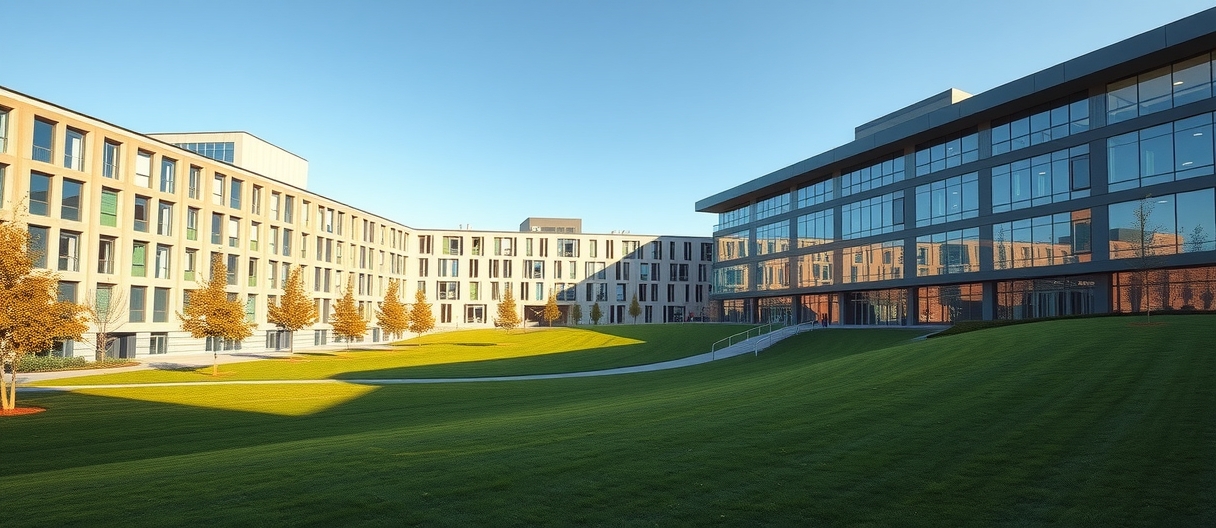
- In the QS World University Rankings 2027, released in June 2026, NUS ranks 10th in the world and NTU 12th, with NTU holding a top-15 place for a second year
- SUTD jumped 253 places to 266th and SMU rose 100 places to 411th
- Singapore's Ministry of Education recognises six autonomous universities: NUS, NTU, SMU, SUTD, SIT and SUSS.
What Are the Latest Singapore University Rankings in 2026?
The QS World University Rankings 2027, published in June 2026, place the National University of Singapore 10th globally and Nanyang Technological University 12th. The Singapore University of Technology and Design entered the world top 300 at 266th, and Singapore Management University climbed to 411th. Both SIT and SUSS were not featured.
QS ranks more than 1,500 universities worldwide in this edition. NUS slipped two places from 8th but stays the only Asian institution inside the global top ten. NTU repeated its 12th-place finish, which makes it the youngest university sitting in that top tier.
| University | QS World Rank 2027 (released 2026) | Previous QS Rank | Change |
|---|---|---|---|
| National University of Singapore (NUS) | 10th | 8th | Down 2 |
| Nanyang Technological University (NTU) | 12th | 12th | No change |
| Singapore University of Technology and Design (SUTD) | 266th | 519th | Up 253 |
| Singapore Management University (SMU) | 411th | 511th | Up 100 |
| Singapore Institute of Technology (SIT) | Not featured | Not featured | Not applicable |
| Singapore University of Social Sciences (SUSS) | Not featured | Not featured | Not applicable |
How Do NUS and NTU Compare Across the Major Ranking Systems?
NUS leads NTU in every major table. NUS sits 10th in QS 2027, 17th in the Times Higher Education World University Rankings 2026 and 53rd in the 2026 Academic Ranking of World Universities. NTU records 12th, 31st and 84th respectively, plus 27th in US News Best Global Universities 2026-2027.
| Ranking System | NUS Rank (2026 edition data) | NTU Rank (2026 edition data) |
|---|---|---|
| QS World University Rankings 2027 | 10th | 12th |
| THE World University Rankings 2026 | 17th | 31st |
| Academic Ranking of World Universities 2026 | 53rd | 84th |
| US News Best Global Universities 2026-2027 | 2nd in Asia | 27th world / 4th in Asia |
The gap narrows or widens depending on what each table measures. QS weights academic and employer reputation heavily, which favours both Singapore universities. ShanghaiRanking's ARWU counts Nobel laureates, highly cited researchers and Nature and Science papers, so it pushes both institutions further down than QS does.
NTU announced that its US News Best Global Universities placing rose to 27th globally in the 2026-2027 edition released on 16 June 2026, making it the fourth-highest ranked university in Asia on that table. NUS sits second in Asia on the same table. NTU also holds first place worldwide for artificial intelligence in ShanghaiRanking's 2025 Global Ranking of Academic Subjects.
National University of Singapore: courses, admissions and campus guideRead →Which Universities Make Up Singapore's Autonomous University System?
Singapore's Ministry of Education recognises six publicly funded autonomous universities. They are NUS, NTU, SMU, SUTD, SIT and SUSS. Only four of them appear in the QS World University Rankings 2027, because SIT and SUSS focus on applied and adult learning rather than the research output that global tables reward.
- NUS is a comprehensive research-intensive university offering a diverse spectrum of courses, including multidisciplinary and cross-faculty programmes.
- NTU is a comprehensive research-intensive university with a strong focus on engineering, science and technology.
- SMU is a specialised research-intensive university built around an interactive, collaborative and seminar-based approach to learning.
- SUTD offers a multi-disciplinary design-centric curriculum with degrees that cut across engineering and architecture.
- SIT offers applied degrees focused on science and technology, plus programmes run with overseas partner universities.
- SUSS provides an applied education in the social sciences for school leavers and adult learners.
A missing ranking is not a quality signal for SIT and SUSS. Global tables reward research citations and international faculty share, and neither institution is built around those metrics. Read their graduate employment outcomes and industry placement records instead of hunting for a world rank.
Why Did SUTD and SMU Rise So Sharply in the 2027 Tables?
SUTD credits its 253-place jump to gains in citations per faculty and employer reputation, entering the global top 300 for the first time at 266th. SMU rose 100 places to 411th and was named the world's most improved university in the QS subject rankings among institutions with ten or more ranked subjects.
SUTD is Singapore's youngest autonomous university and was built with heavy outside input. MIT signed a formal agreement with SUTD on 25 January 2010 covering curriculum development, faculty recruitment and an International Design Centre at SUTD with a mirror facility at MIT. Then MIT president Susan Hockfield called it MIT's most extensive collaboration with an overseas educational institution to date.
SMU's climb is easier to read through its subject results. In the QS World University Rankings by Subject 2026, Business and Management Studies reached 39th globally, Accounting and Finance 50th, Law 56th after rising 45 places, and Social Sciences and Management 86th after rising 89 places. Eight of ten ranked SMU subjects moved up.
Master of Science in Singapore: programmes, fees and applicationsRead →What Do Singapore Universities Cost International Students in 2026?
With the MOE Tuition Grant, most NUS and NTU undergraduate programmes cost international students about S$21,400 per year including GST for the 2026 intake. Law at NUS runs to S$30,450. Without the grant, non-subsidised fees rise sharply, reaching S$39,700 at NUS Computing and S$40,600 for NTU lab-based degrees.
| Programme (2026 intake) | International Student Fee With MOE Tuition Grant (per year, incl GST) | Non-Subsidised Fee (per year, incl GST) |
|---|---|---|
| NUS Computing / Design and Engineering / Humanities and Sciences | S$21,400 | S$39,700 (Computing) |
| NUS Business | S$22,200 | S$33,400 |
| NUS Science (Pharmacy) | S$23,650 | S$43,050 |
| NUS Law | S$30,450 | S$44,450 |
| NTU most programmes | S$21,400 | S$40,600 lab-based / S$36,350 non-lab |
| NTU Accountancy and Business cluster | S$21,800 | S$45,600 |
| NTU Renaissance Engineering Programme | S$32,000 | Not applicable |
The subsidised column is not free money. Taking the MOE Tuition Grant commits you to a bond, and the Ministry of Education states that you must be employed full-time in a Singapore entity for three years to fulfil your bond obligations after you graduate. Budget for the non-subsidised figure if you plan to leave Singapore straight after your degree.
Medicine sits in a different bracket entirely. NUS Medicine excluding Nursing costs international students S$87,800 a year with the grant, and NTU Medicine S$91,250. Both figures are per annum and include the prevailing nine per cent GST.
How Should You Use These Rankings When Choosing a University?
Treat the overall rank as a filter, not a decision. Compare subject tables, because SMU beats its overall 411th position with Business and Management at 39th. Then weigh tuition, the three-year Tuition Grant bond, and graduate employment data for your specific programme before you shortlist any Singapore university.
- Check the subject ranking for your discipline, not just the institutional rank.
- Compare at least two systems, since QS, THE and ARWU weight reputation and research output very differently.
- Confirm the current fee on the university's own registrar or admissions page before you budget.
- Decide whether you can accept the three-year Singapore employment bond attached to the MOE Tuition Grant.
- Look at SIT and SUSS on employment outcomes if your goal is applied, industry-facing training.